

Plastic Island, developed by the Indonesia-based “Ecogames” collective, is an educational board game that thematizes combating plastic pollution. Participants clean and upcycle trash, enhancing the ocean’s health; the game (like every title designed by the Ecogames collective) is created by local artisans in Bali, at least partly from upcycled materials like recycled wood, canvas, and upcycled plastic waste removed from local Indonesian waste streams. Plastic Island is intended for classroom and community education and encourages teamwork, critical thinking, and environmental stewardship through practical pollution-oriented actions.
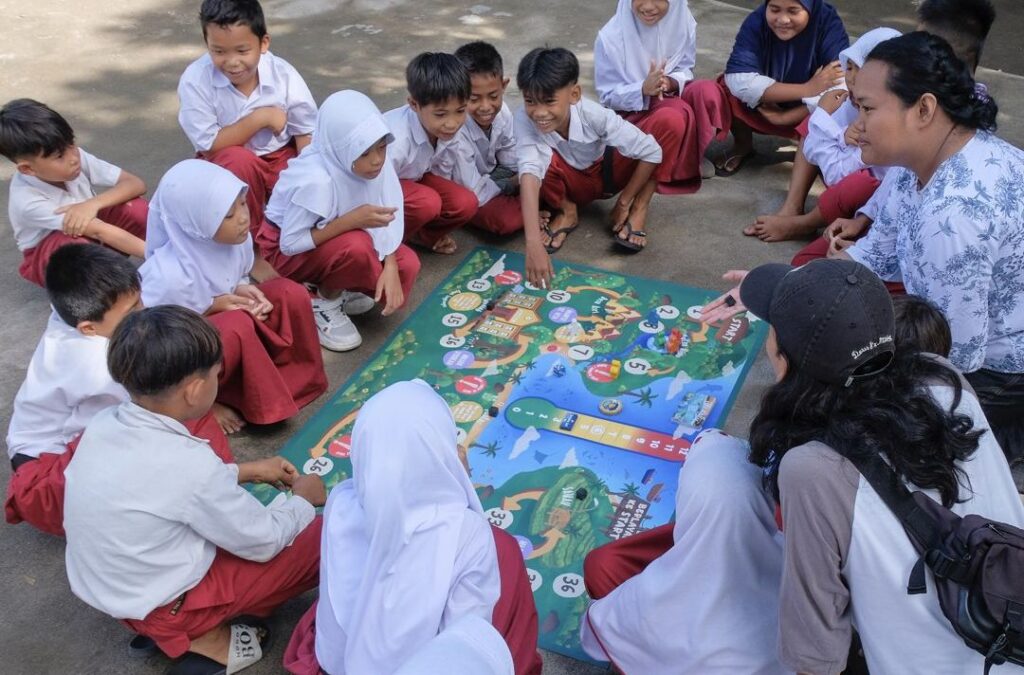
From the project website: “Moving around the board, players share solutions to preventing and removing trash from the island’s forest, village, school, beach, market, and farm areas. The trash they collect can then be upcycled, and each time this happens the ocean’s health improves.” The game accommodates groups of up to 30 students. Un the photos on the website, kids are shown playing the game outside on the ground, which, while uncommon in Western settings, clearly enhances the embodied engagement with themes of natural integrity.
The core objective of Plastic Island is to collaboratively clear plastic pollution from a shared island and improve the surrounding ocean’s ecological health. Players navigate their tokens around a board representing an island community divided into six distinct socio-ecological zones: the forest, village, school, beach, market, and farm. As time progresses, these zones are threatened by accumulating plastic pollution, represented by ‘trash cubes’. The game features an ocean health meter; rather than competing to amass individual prosperity, players win by working together to remove trash from the ecosystem and move it to a dedicated Upcycle Center Mat. Every time trash is successfully upcycled, the ocean’s health metric improves. If the pollution overflows before the island is secured, the ecosystem collapses.
For example, a roll of the die or a drawn Event Card triggers an influx of trash cubes onto the Market and Beach sectors, threatening to overflow into the ocean. Players must debate turn-order and movement strategies, e.g. dispatching a player token directly to the beach to clean up the immediate ecological threat or visiting the school sector to share creative structural solutions that might prevent future trash generation. The game forces a choice between short-term symptom mitigation and long-term systemic prevention.
Once trash has been successfully gathered from the village and farm zones, it is sitting in a temporary holding area or the Dumpsite Mat. Simply removing trash from a visible zone is not enough; instead, players must dedicate actions to transporting collected waste specifically to the upcycle center mat. For example, they can allocate their limited movement and turns deciding whether to keep sweeping the zones or to halt cleanup to process the waste they already have, which fosters conceptual engagement with waste management as a process.
If an event card introduces a severe pollution crisis or a systemic obstacle that a regular player token cannot handle alone, players can use a specialized ‘superhero token’. They must communicate and collectively decide how to leverage this shared resource. Instead of acting as independent agents, they must coordinate where the ‘superhero’ is most needed to maximize systemic impact. This creates a temporary sense of empowerment while still emphasizing the importance of community-based decision-making.
A compendium Plastic Island activity book is available to complement the board game; the book includes dozens of activities for kids to explore and deepen their understanding and skills around plastic pollution reduction.